CT-Guided HDR Interstitial Brachytherapy for Lung Lesions
Feasibility and Outcomes in a Resource-Limited Setting — A Study from Kathmandu Brachytherapy Clinic
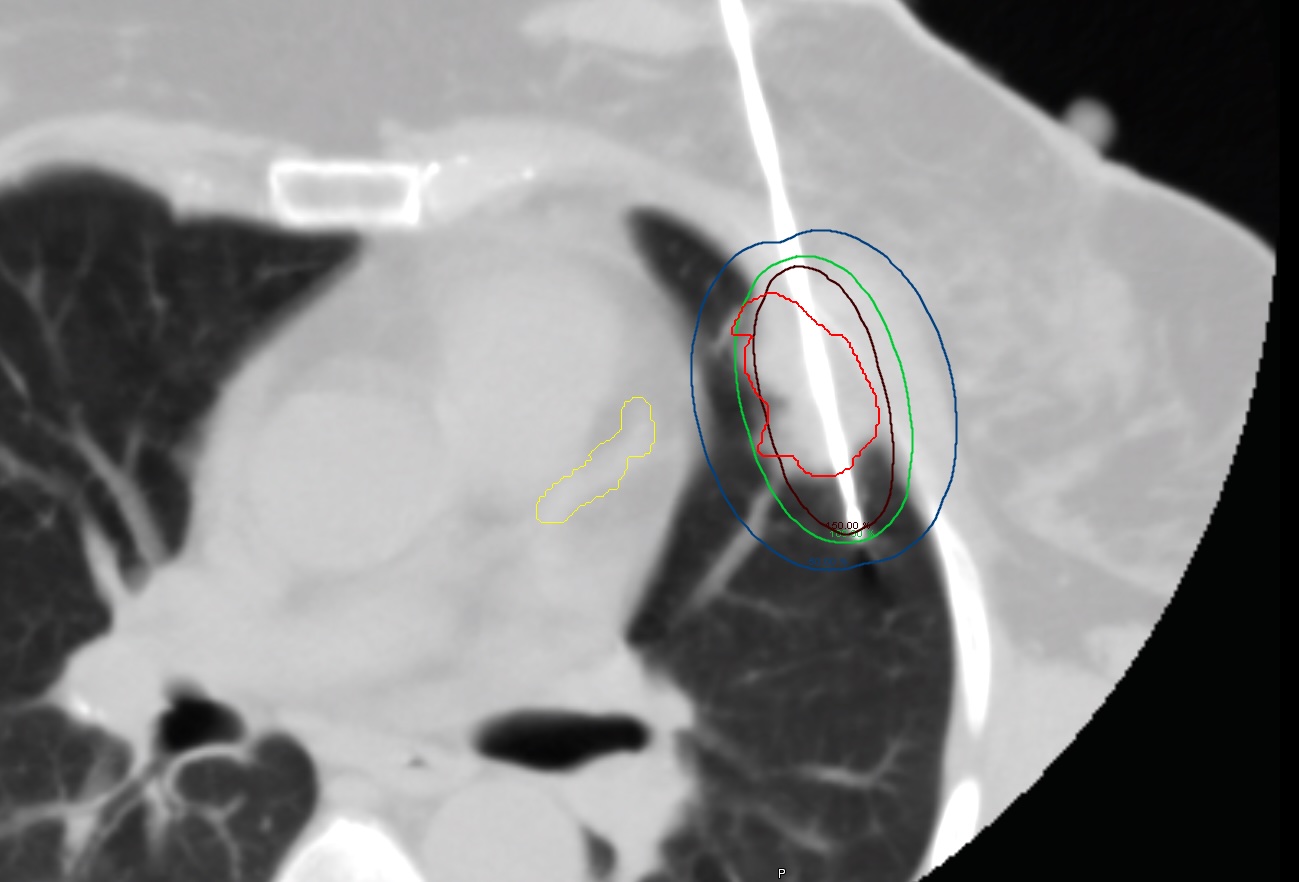
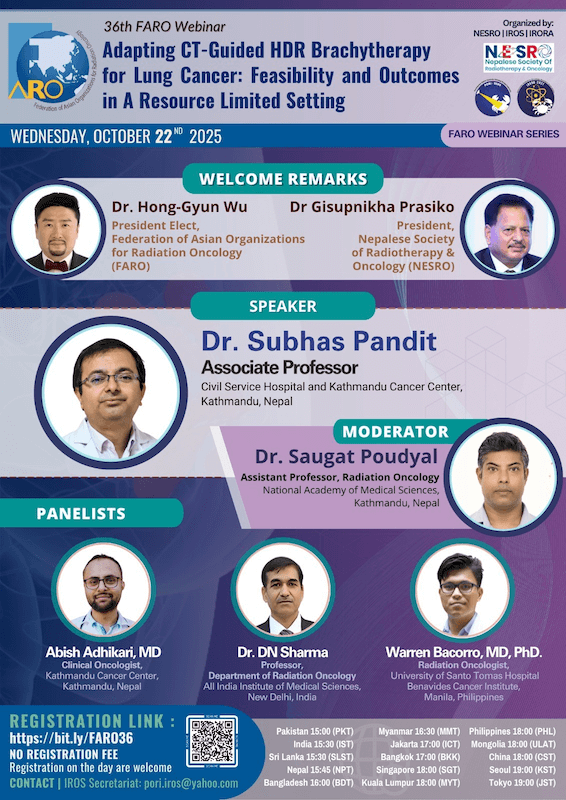
36th FARO Webinar (October 2025): Dr. Subhas Pandit presenting Kathmandu Cancer Center’s pioneering HDR Brachytherapy work.
🔍 Study Overview
This study, published in the Brachytherapy Journal (Elsevier) which is official journal of American Brachytherapy Society in 2025, represents Nepal’s first use of CT-guided high-dose-rate (HDR) interstitial brachytherapy for lung tumors — both primary and metastatic.
The technique delivers radiation directly inside or next to the tumor through fine catheters placed using CT imaging guidance. This allows highly precise targeting while sparing healthy lung tissue.
The work demonstrates that even in resource-limited settings like Nepal, advanced internal radiotherapy can be safely implemented with outstanding outcomes.
We are the only center in Nepal and one of few in Asia which offer this type of treatment.
🎯 Key Findings
- Precise tumor targeting using CT-guidance reduced radiation exposure to healthy tissues.
- All patients completed treatment safely with minimal side effects.
- Tumor control rate: Over 90% for treated lesions in follow-up.
- Short hospital stay — most patients discharged within 24 hours.
- The study confirms HDR brachytherapy as a practical, non-surgical option for lung cancer in Nepal.
👨⚕️ Why It Matters
In Nepal, many lung cancer patients are unable to undergo surgery due to advanced disease or limited access to thoracic surgery. This study provides a new option — a safe, cost-effective treatment performed locally at Kathmandu Cancer Center.
CT-guided HDR brachytherapy is particularly valuable for small or deep-seated lung tumors, and it can also treat metastatic lesions in the liver or other organs.
📚 Publication Details
- Title: CT-guided HDR Interstitial Brachytherapy for Lung Lesions — Feasibility and Outcomes in a Resource-Limited Setting
- Authors: Simit Sapkota1 ∙ Subhas Pandit ∙ Sundar Suwal3 ∙ Jeebana Bhandari ∙ Abish Adhikari ∙ Rajan Prajapati ∙ Gerim Prasai ∙ Sunil Shrestha ∙ Anjani Kumar Jha
- Journal: Brachytherapy (Elsevier)
- Year: 2025
- DOI: 10.1016/j.brachy.2025.08.010
- PubMed: PMID 41025277
💬 In Simple Terms
This research shows that Nepal’s doctors can perform complex cancer treatments with global standards of accuracy. Using advanced imaging and precise internal radiation, Kathmandu Cancer Center now offers a non-surgical, day-care treatment for certain lung cancers — reducing cost, recovery time, and side effects.
Patients who cannot undergo surgery can still receive effective, targeted therapy — bringing hope closer to home.